It is the middle of the night, and a pipe bursts in your kitchen. Or perhaps, you receive a sudden notification that your company is restructuring, and your role is at risk. In the traditional financial world, these moments were met with high-interest credit card debt or the stress of borrowing from relatives.
This is where an emergency fund becomes essential. However, the reality is that many people are unprepared. According to a 2025 study, nearly 75% of Indian households do not have an emergency fund, making them vulnerable during financial disruptions.
The good news is that building an emergency fund is possible even with a fixed income. It does not require a high salary, only consistency and a clear plan.
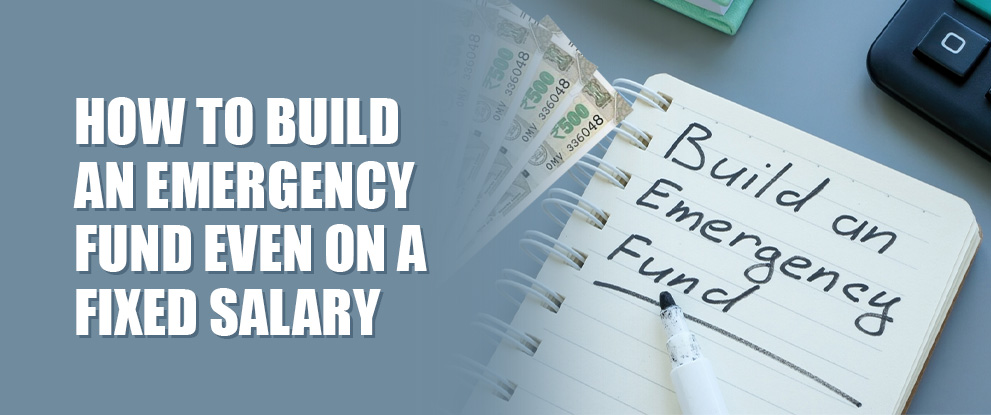
An emergency fund is a reserve of money kept aside only for unexpected situations. It is not meant for lifestyle spending, travel, or planned purchases. Its purpose is to handle situations that cannot be predicted but require immediate financial support.
These situations may include medical expenses, sudden job loss, urgent repairs, or family emergencies. Without an emergency fund, people often depend on credit cards or loans, which can increase financial pressure due to interest costs.
Financial experts generally recommend saving 3 to 6 months of essential expenses, but even starting with one month’s expense can make a difference. The focus is not on reaching the ideal amount immediately, but on building it steadily over time.
To save effectively, you must first master the geography of your own wallet. Most financial experts in 2026 advocate for the 50/30/20 rule, which provides a structured way to manage a fixed income without feeling deprived.
50% for Needs: This covers your non-negotiables: rent, groceries, utilities, and essential commute. In 2026, middle-income earners are spending roughly 55% on basics, so tightening this belt is the priority.
30% for Wants: This is your lifestyle budget, dining out, OTT subscriptions, and hobbies. To build an emergency fund quickly, this is the first section you should audit for leaks.
20% for Savings & Debt: This is your ‘Future You’ fund. Until you have at least three months of expenses saved, the entirety of this 20% should be directed toward your emergency buffer.
The biggest hurdle to building an emergency fund is human psychology. We are wired to spend what we see. Therefore, the secret to how to save money on salary lies in making the process invisible and automatic.
Automate on Payday: Set up a standing instruction to move your target savings amount to a separate account the very morning your salary hits. If the money isn't in your main spending account, you won't count it as available cash.
The 30-Day Audit: Log every single transaction for one month. In 2026, micro-transactions via UPI are the primary cause of budget failure. Identifying that you spend Rs. 3,000 a month on quick-delivery snacks can instantly reveal your emergency fund contribution.
Park it Wisely: Don't keep all your emergency cash in a standard savings account. Split it between a high-yield savings account for instant access and liquid mutual funds, which in 2026 are offering T+1 day liquidity.
Use Windfalls: Use annual bonuses, tax refunds, or even small gifts to supercharge the fund. A single Rs. 50,000 bonus can jumpstart your buffer by two full months in one day.
A practical way to understand saving is to break it down based on income levels. The table below shows how an emergency fund can be built gradually.
|
Monthly Salary |
Suggested Monthly Savings |
Annual Savings |
6-Month Emergency Fund Target |
|
Rs. 25,000 |
Rs. 1,500 – Rs. 2,000 |
Rs. 18,000 – Rs. 24,000 |
Rs. 75,000 – Rs. 1.5 lakh |
|
Rs. 40,000 |
Rs. 3,000 – Rs. 5,000 |
Rs. 36,000 – Rs. 60,000 |
Rs. 1.5 – Rs. 2.4 lakh |
|
Rs. 60,000 |
Rs. 5,000 – Rs. 8,000 |
Rs. 60,000 – Rs. 96,000 |
Rs. 1.8 – Rs. 3.6 lakh |
|
Rs. 1,00,000 |
Rs. 10,000 – Rs. 15,000 |
Rs. 1.2 – Rs. 1.8 lakh |
Rs. 3 – Rs. 6 lakh |
This approach shows that even small monthly savings can build a strong emergency fund over time. The key is to align savings with income rather than trying to follow a fixed number.
Without an emergency fund, unexpected expenses often lead to borrowing. While credit options provide quick relief, they can increase long-term financial pressure if not managed carefully.
In urgent situations, people may rely on digital lending platforms. For example, using instant personal loan apps like Loan112, which offer loans up to Rs. 1.5 lakh with 10-minute disbursals can help manage immediate financial needs when savings are not available.
However, depending entirely on credit is not a sustainable solution. This is why building an emergency fund remains important; it reduces reliance on borrowing and gives you more control over your finances.
The time required depends on how much you can save each month. It is not about speed, but consistency.
If you save Rs. 5,000 per month, you can build Rs. 60,000 in a year. If you increase the amount gradually, the fund grows faster. Even if it takes one to two years to build a full emergency fund, the long-term benefit is worth the effort.
Progress may feel slow initially, but over time, it creates financial stability and ease.
The focus of an emergency fund is not high returns but safety and accessibility. Common options include:
A balanced approach often works best, keeping part of the fund easily accessible and the rest in low-risk options.
While building an emergency fund, certain mistakes can reduce its effectiveness.
Avoiding these mistakes helps maintain a strong and reliable safety net.
Building an emergency fund on a fixed salary may seem challenging, but it is one of the most practical financial goals you can work toward. It does not require a high income, only discipline and consistent effort.
By understanding your expenses, adjusting spending habits, and saving regularly, you can gradually create a financial cushion that protects you during uncertain times.
Learning how to save money on salary is not about restriction, but about balance. With the right approach, even a fixed income can support strong financial security through a well-built emergency fund.


Apply online for instant emergency loans with quick approval, minimal paperwork, and fast disbursal—when you need funds the most.

Apply online for instant emergency personal loans with Loan112—fast approval, minimal documents, and quick disbursal in Gurgaon.

Looking for urgent cash in Hyderabad? Get instant short-term personal loans in Hyderabad with easy eligibility, fast approval, and online disbursal.
Instant emergency personal loans in Bangalore with a smooth online process, quick approval, and fast online disbursal for urgent financial needs.

Get instant short-term loans in Kolkata without CIBIL score checks, with easy online application, quick approval, and fast fund disbursal.
DEVMUNI LEASING & FINANCE LIMITED (RBI Reg. No.: 8-14.02719) is a Non-Banking Finance Company (NBFC) registered with the Reserve Bank of India (RBI). Loan112 is the brand name under which the company conducts its lending operations and specializes in providing quick and easy access to personal loans to meet customers' instant financial needs.


