Taking a personal loan is not just about borrowing money; it’s about choosing the right personal loan interest rates that won’t stretch your budget. One key decision is whether to choose a fixed or floating interest rate, which can drastically affect your EMIs and total repayment. In India, digital personal loans are booming, with the outstanding loan book reaching around 1.39 lakh crore and sanctions jumping 53% year-on-year, showcasing how more people rely on quick, flexible credit. Knowing how the rates work can save you thousands and make your borrowing smarter and stress-free.
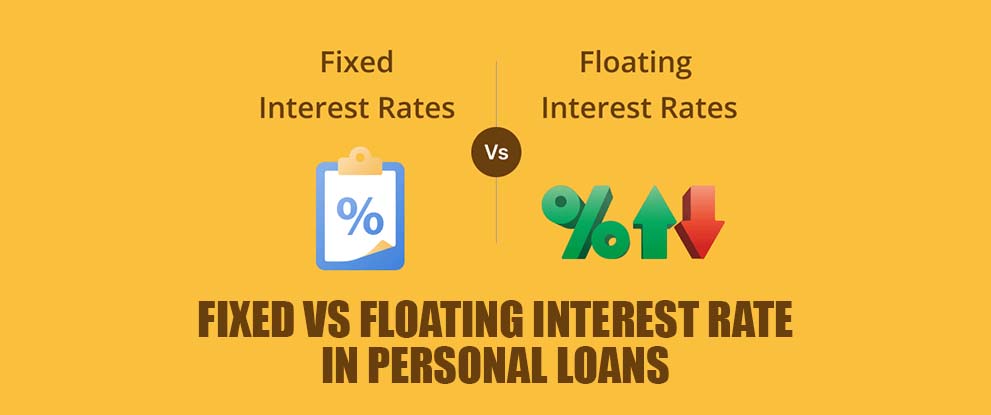
When you take a personal loan, lenders offer different personal loan interest rate structures: fixed and floating.
A fixed interest rate stays the same throughout the loan tenure. Your EMI remains constant, making budgeting simple. These rates are usually slightly higher as the lender bears the risk of rising market rates. Whereas a floating interest rate can change based on market conditions, it is often linked to benchmarks like the RBI’s repo rate. Your interest cost may rise or fall, which can affect your EMI.
Simply put:
Fixed rates = same interest throughout the loan tenure.
Floating rates = interest varies with market fluctuations.
With a fixed interest rate personal loan, the interest percentage you agree to at the time of disbursal remains unchanged for the entire duration of your loan. This makes your monthly payments predictable and easy to budget for. Planning long-term financial goals becomes simpler because you know exactly what your repayment schedule looks like.
For example, if you borrow 5 lakh at a fixed rate of 13% for 3 years, your EMI will remain 16,900 every month, regardless of changes in market interest rates.
Fixed rates are particularly beneficial when market interest rates are rising or expected to rise, as they protect you from higher EMIs later. However, since the lender bears the risk of rate change, fixed interest rates tend to be comparatively higher at the start of the loan.
Pros:
Predictable monthly repayments throughout the loan tenure.
Stability, even if market rates increase.
Easier for budgeting and financial planning.
Cons:
Higher starting rate compared to floating options.
You won’t benefit from rate decreases in the market.
A floating interest rate on a personal loan is tied to a benchmark such as the RBI’s repo rate and can adjust periodically based on financial market trends. If the benchmark rate decreases, your loan’s interest rate may also reduce, potentially lowering your EMI and total interest cost. Conversely, if market rates rise, your cost of borrowing may go up.
For example, if you borrow 5 lakh at an initial floating rate of 11% for 3 years, your EMI may start at 15,700. If market rates rise, your EMI could increase to 17,400, but if rates fall, it might drop to 14,800.
This system provides flexibility and potential savings, but also introduces uncertainty because your monthly repayments can change over time.
Pros:
Typically lower initial rates than fixed interest rates.
Beneficial if interest rates fall over the loan tenure.
Potential to save on overall interest cost.
Cons:
EMIs may increase if market rates rise.
Can make budgeting more challenging due to fluctuating payments.
Understanding the difference between fixed vs floating interest rates is imperative when selecting a personal loan. The choice affects your monthly EMIs, total interest payout, and financial planning.
|
Feature |
Fixed Interest Rate |
Floating Interest Rate |
|
Rate Stability |
The interest rate stays the same throughout the loan tenure. |
The interest rate changes periodically based on market benchmarks. |
|
EMI Predictability |
EMIs remain constant, making budgeting easier. |
EMIs can increase or decrease if market rates change. |
|
Initial Interest Level |
Usually higher than floating rates at the start. |
Typically starts lower compared to fixed rates. |
|
Protection from Rate Rises |
Yes, EMIs won’t rise even if market rates go up. |
No, the borrower bears the risk of rising rates. |
|
Benefit from Rate Falls |
No, EMIs don’t reduce even if market rates fall. |
Yes, EMIs may reduce if benchmark rates fall. |
|
Suitability |
Ideal for those seeking stability and predictable cash flow. |
Suited for those comfortable with market fluctuations and potential savings. |
|
Risk Level |
Lower risk, fixed payments forever. |
Higher risk, payments can vary. |
Deciding between a fixed vs floating interest rate depends on your risk appetite. As far as personal loan interest rates are concerned, the Loan112 instant personal loan app is the ideal solution, offering loans up to 1.5 lakh with 10-minute disbursals, ensuring your EMIs remain stable and budget-friendly.


Apply online for instant emergency loans with quick approval, minimal paperwork, and fast disbursal—when you need funds the most.
Apply online for instant emergency personal loans with Loan112—fast approval, minimal documents, and quick disbursal in Gurgaon.

Looking for urgent cash in Hyderabad? Get instant short-term personal loans in Hyderabad with easy eligibility, fast approval, and online disbursal.
Instant emergency personal loans in Bangalore with a smooth online process, quick approval, and fast online disbursal for urgent financial needs.
Get instant short-term loans in Kolkata without CIBIL score checks, with easy online application, quick approval, and fast fund disbursal.
DEVMUNI LEASING & FINANCE LIMITED (RBI Reg. No.: 8-14.02719) is a Non-Banking Finance Company (NBFC) registered with the Reserve Bank of India (RBI). Loan112 is the brand name under which the company conducts its lending operations and specializes in providing quick and easy access to personal loans to meet customers' instant financial needs.


