A salary credit notification arrives, but before the month ends, an unexpected expense wipes out your budget. This is exactly why instant digital personal loans have become so common among salaried borrowers in India. Today, a loan application can be completed from a phone in minutes. India’s fast-growing digital lending ecosystem has made borrowing quicker, with digital lenders disbursing over Rs. 97,000 crore in personal loans in just the first half of FY26. However, fast approval does not mean zero verification. Understanding instant personal loan eligibility and the documents required for personal loan approval is still essential before applying online.
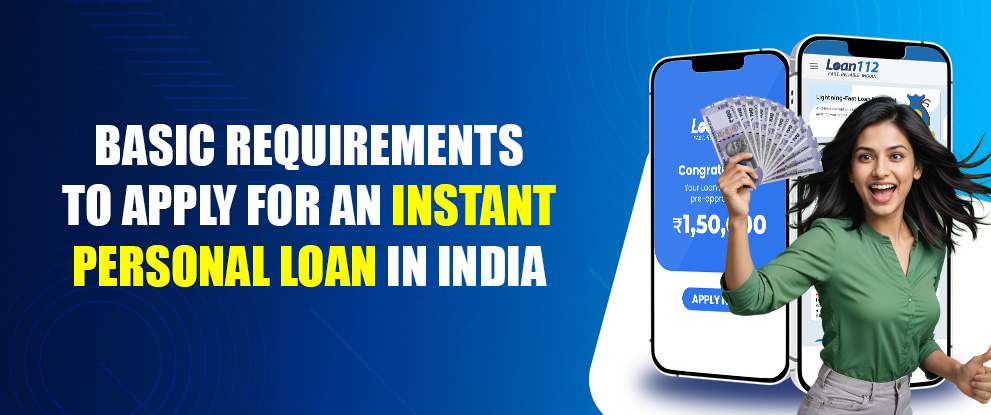
Eligibility requirements for instant personal loans are usually simple, especially for salaried applicants. While criteria may vary slightly between lenders, the commonly accepted requirements are as follows:
The applicant should be an Indian resident.
The applicant must be a salaried employee.
The minimum age requirement is generally 25 years.
An active savings bank account is mandatory.
Basic KYC and income documents must be available.
Digital lending has also become more common among younger borrowers. According to a recent FACE report, borrowers below 35 years accounted for nearly 60% of sanctioned digital loan value in India, showing the growing preference for online loans among working professionals.
The documents required for personal loan approval mainly include identity proof, address proof, income proof, and application-related documents. Since most applications are processed digitally, applicants are generally required to upload scanned copies or photographs of these documents online.
|
Document type |
Documents accepted |
|
Identity proof |
Aadhaar Card and PAN Card |
|
Address proof |
Voter ID, Driving Licence, Passport, Utility Bills, Post-paid/Landline Bill |
|
Income proof |
Last 3 months’ salary slips and bank statements |
|
Application documents |
Filled out the application form and passport-size photograph |
Most lenders ask for recent salary slips and bank statements to verify salary credits and repayment ability. These documents also help identify active banking history and financial consistency before approval.
Document verification is an important part of the lending process because it helps lenders reduce fraud and confirm borrower details. RBI-regulated lenders and NBFCs follow KYC guidelines before approving digital loans, especially for fully online applications. The Reserve Bank of India also introduced updated Digital Lending Directions in 2025 to improve borrower protection and transparency in online lending.
The main reasons for verification are as follows:
Identity proof confirms the borrower’s legal identity.
Address proof verifies residential and communication details.
Salary slips and bank statements help assess income regularity.
Application forms and photographs support official record validation.
According to recent financial reports, digital fraud attempts in online lending have increased alongside the rise in instant loan applications. Because of this, lenders now rely heavily on automated verification systems and document authentication tools before approving loans.
Before applying, borrowers should check interest rates, repayment tenure, and additional charges instead of focusing only on fast approval timelines. Understanding the complete borrowing cost helps avoid repayment issues later. Some important loan-related details include:
Interest rate structure
Annual Percentage Rate (APR)
Processing fees
EMI amount
Loan tenure
Late payment penalties
Many instant personal loans now come with repayment periods ranging from 1 to 3 years. Among digital lending platforms, the Loan112 instant personal loan app has become a go-to for many because it offers personal loans up to Rs.5 lakh with disbursals in just 10 minutes.
Even when applicants meet the basic instant personal loan eligibility conditions, applications may still get rejected due to verification issues or incorrect details. Since many lenders now use automated approval systems, even small mismatches can affect approval outcomes. According to industry reports, over 84% of lenders now use automated and alternative data-based underwriting systems to assess borrowers, making accurate documentation more important than ever.
Some common reasons include:
Incorrect details in the application form
Blurred or outdated documents
Irregular salary credits
Multiple active loans or repayment defaults
Mismatch between PAN, Aadhaar, and bank account details
KYC-related issues have also become a major concern in digital lending. Recent RBI observations highlighted that delays and lapses in KYC verification weaken fraud prevention systems and increase onboarding issues for borrowers. Industry reports further show that document-related problems and information mismatches remain among the most common causes of rejection in online loan applications.
In digital lending, approvals are often decided within minutes, which makes preparation just as important as eligibility. Understanding instant personal loan eligibility in advance and keeping the documents required for personal loan applications ready can reduce delays, verification issues, and rejection chances. Instead of rushing through the process, borrowers who organise their financial records and submit accurate details are more likely to experience smoother approvals and faster access to funds when needed.


Apply online for instant emergency loans with quick approval, minimal paperwork, and fast disbursal—when you need funds the most.
Apply online for instant emergency personal loans with Loan112—fast approval, minimal documents, and quick disbursal in Gurgaon.

Looking for urgent cash in Hyderabad? Get instant short-term personal loans in Hyderabad with easy eligibility, fast approval, and online disbursal.
Instant emergency personal loans in Bangalore with a smooth online process, quick approval, and fast online disbursal for urgent financial needs.
Get instant short-term loans in Kolkata without CIBIL score checks, with easy online application, quick approval, and fast fund disbursal.
DEVMUNI LEASING & FINANCE LIMITED (RBI Reg. No.: 8-14.02719) is a Non-Banking Finance Company (NBFC) registered with the Reserve Bank of India (RBI). Loan112 is the brand name under which the company conducts its lending operations and specializes in providing quick and easy access to personal loans to meet customers' instant financial needs.


